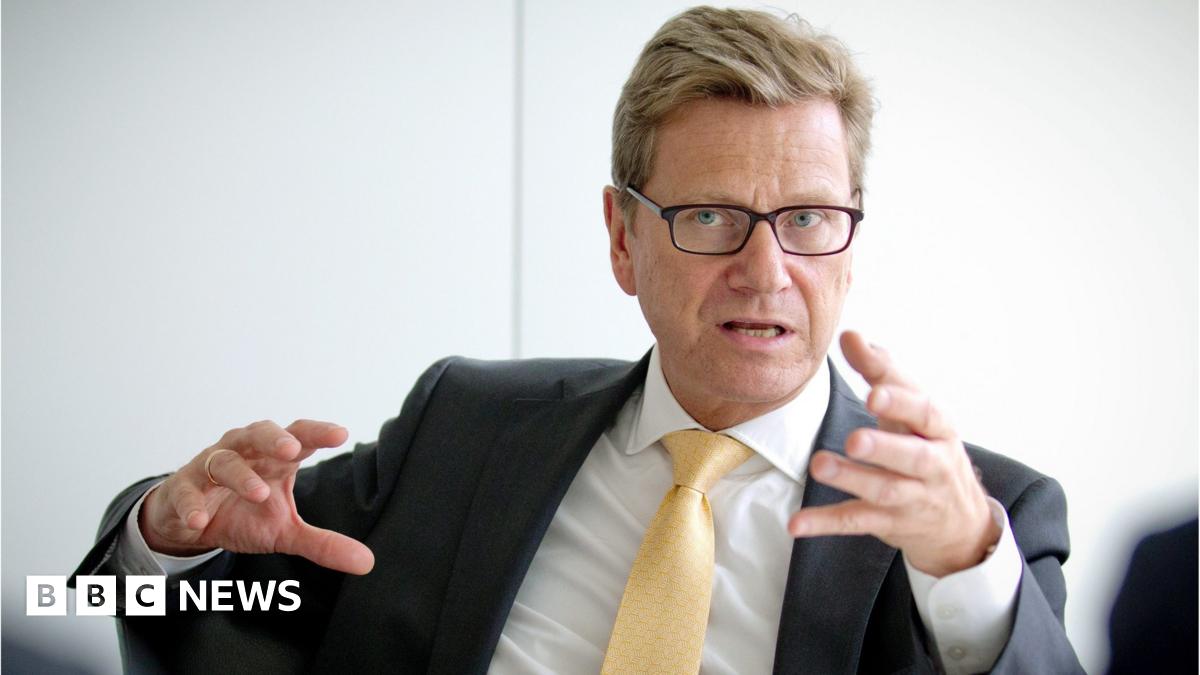
Guido Westerwelle: Unseen Tapes Reveal Life and Legacy 10 Years On
A decade has passed since the untimely death of Guido Westerwelle, a figure who profoundly shaped German politics. On the 10th anniversary of his passing, the public is invited to revisit his extraordinary life through a poignant new documentary, "Westerwelle," broadcast by Das Erste (ARD). This film promises an unprecedented look into the former German Foreign Minister's final years, featuring previously unreleased audio recordings that offer intimate reflections on his political journey, personal struggles, and the profound vulnerability he experienced after his leukemia diagnosis. This retrospective journey reminds us of the indelible mark left by
Guido Westerwelle Tot – a man whose influence continues to resonate.
The documentary provides a unique opportunity to understand the man behind the political office, capturing his thoughts as he grappled with a life-threatening illness. It sheds light on his role as a transformative leader of the FDP and a key player on the international stage, offering insights that are as relevant today as they were a decade ago.
The Unseen Tapes: A Journey "Between Two Lives"
At the heart of the "Westerwelle" documentary are approximately four hours of never-before-heard audio recordings. These candid conversations took place between Westerwelle and journalist Dominik Wichmann following his devastating cancer diagnosis. Commissioned for their collaborative book, "Zwischen zwei Leben" (Between Two Lives), published in 2015, these recordings capture Westerwelle reflecting with raw honesty on his political path, personal turning points, and the immense shift in perspective brought on by his illness.
In these powerful audio excerpts, Westerwelle articulates the stark contrast between his public persona and his private battle, famously stating, "For decades I was strong, and suddenly I am very weak." This profound admission underscores the film's intent: to portray not just a politician, but a human being confronting mortality. The vulnerability he displays is a rare glimpse into the psyche of a public figure, offering a lesson in resilience and introspection.
Produced by WDR and Open Minds Media, and directed by Jobst Knigge, the documentary meticulously weaves these intimate audio fragments with new and existing archival footage. It promises to reveal the successes and controversies that defined his career, providing a comprehensive portrait that transcends partisan politics. The public can access this compelling narrative starting March 9th on the ARD-Mediathek, marking a significant moment of remembrance and re-evaluation of his enduring impact. For a deeper dive into these reflections, consider
Westerwelle's Final Words: Candid Reflections on Life, Cancer, and Politics.
A Legacy Beyond Politics: Shaping a Nation
Guido Westerwelle's political career was defined by a decade-long leadership of the Free Democratic Party (FDP) from 2001 to 2011, culminating in his pivotal roles as German Foreign Minister and Vice-Chancellor from 2009 to 2013. His tenure profoundly shaped the trajectory of the FDP and left an undeniable mark on the political landscape of Germany. He was known as a man who wasn't afraid to "tear down boundaries" and, later in his life, demonstrated a remarkable capacity for vulnerability, challenging traditional notions of political strength.
The documentary enriches its portrait of Westerwelle through the perspectives of those closest to him. His life partner, Michael Mronz, offers deeply emotional insights into his private world, revealing the personal side often unseen by the public. Leading political figures and companions, including Wolfgang Kubicki, Christian Lindner, Renate Künast, and Klaus Wowereit, also contribute, adding layers to the film's comprehensive depiction. These testimonials bridge the gap between his public achievements and his personal struggles, painting a holistic picture of a complex individual.
Westerwelle's leadership of the FDP saw the party achieve significant electoral success, particularly in the 2009 federal election, where it secured its best result in decades. His political style, often characterized by charisma and directness, resonated with a segment of the electorate yearning for liberal reforms. Beyond policy, he was a politician who seemed to connect on a human level, making his illness and subsequent reflections all the more impactful. His passing 10 years ago was a moment of profound loss for many, and this documentary serves as a timely reminder of his multifaceted contributions to Germany and the world.
Westerwelle's Vision: What Would He Say Today?
As the world grapples with a myriad of geopolitical challenges a decade after his death, questions naturally arise about how Guido Westerwelle would navigate the contemporary political landscape. Journalist Dominik Wichmann, who collaborated with Westerwelle on his biography, believes he would have been "a cautionary voice for prudence."
Westerwelle's foreign policy was rooted in a steadfast "non-interventionist" approach, emphasizing the "command of restraint" in international relations. While he believed in a sustainable peace policy, he also understood that "different times certainly require different expressions of politics." This suggests a nuanced approach to current crises. For instance, Wichmann asserts that Westerwelle's fundamental commitment to Israel's security – a cornerstone of German foreign policy (Staatsräson) – would not have wavered "by a single iota." However, he would simultaneously advocate for a rules-based international order, stressing deliberation and calm amidst escalating tensions.
His approach to coalition politics was equally pragmatic. Westerwelle viewed coalition partners not merely as "party friends, but real partners." This philosophy suggests that he would have been capable of working constructively across the political spectrum, even with figures like Friedrich Merz, if it served the broader interests of the country. In an era marked by increasing polarization and complex global conflicts, Westerwelle's emphasis on restraint, international law, and constructive partnership offers valuable insights. His enduring impact and the call for such principles are explored further in
A Decade Without Westerwelle: His Enduring Impact and Call for Restraint. His legacy is not just about the policies he enacted, but the character he brought to public service – a character marked by intellectual rigor, personal courage, and a deep commitment to liberal democratic values.
***
The release of "Westerwelle" on Das Erste and in the ARD-Mediathek is more than just a documentary; it's a significant cultural and historical event. It provides a rare and intimate opportunity to reflect on the life and legacy of a towering figure in German politics, especially a decade after his passing. Through his own words, recorded in a period of profound personal challenge, we gain a deeper understanding of the man who served as Foreign Minister and Vice-Chancellor, a leader who was not afraid to show his human side. The film ensures that the memory and impact of
Guido Westerwelle Tot continue to inspire reflection on leadership, vulnerability, and the enduring principles of diplomacy in an ever-changing world.