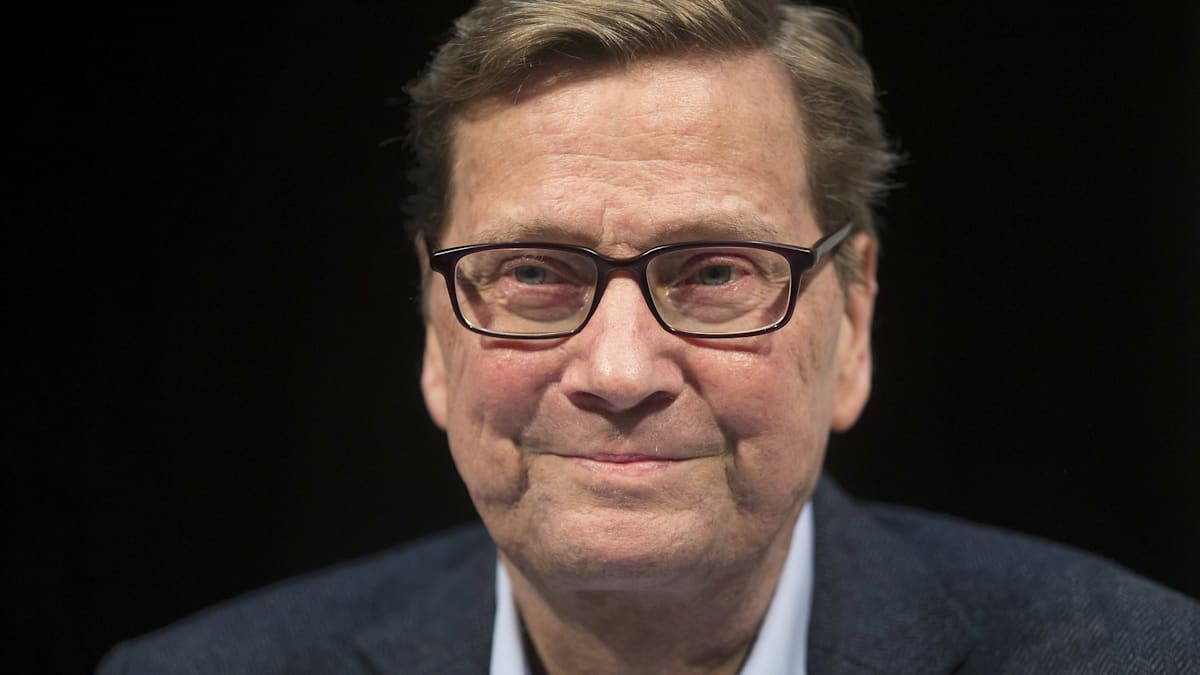
A Decade Without Guido Westerwelle: His Enduring Impact and Call for Restraint
March 18, 2026, marks a solemn anniversary: ten years since the passing of Guido Westerwelle. His death from leukemia left a void not just within his party, the FDP, but across the entire German political landscape. A decade on, as the world grapples with escalating tensions and complex geopolitical challenges, Westerwelle's voice, particularly his advocacy for restraint and adherence to international law, resonates more profoundly than ever. This milestone is being commemorated with a new documentary, offering an unprecedented look into his final years and the reflections of a man who profoundly shaped an era.
Remembering Guido Westerwelle: A Decade Since His Passing
Guido Westerwelle, born in Bad Honnef in 1961, carved out a remarkable political career that saw him lead the Free Democratic Party (FDP) for a decade, from 2001 to 2011. His tenure culminated in serving as Germany's Foreign Minister and Vice-Chancellor from 2009 to 2013. He was a figure of dynamism, charisma, and sometimes controversy, but always with an unwavering commitment to liberal principles.
The 10th anniversary of Guido Westerwelle's passing is being honored with a compelling new documentary titled "Westerwelle," produced by WDR and Open Minds Media for Das Erste. Directed by Jobst Knigge, the film promises an intimate portrait of the former minister, enriched by previously unreleased audio recordings. These recordings, made in his final years, capture Westerwelle in deep conversation with journalist Dominik Wichmann after his cancer diagnosis, offering a poignant and unfiltered glimpse into his thoughts on his political journey, personal struggles, and the profound changes wrought by illness.
The documentary, along with the accompanying insights from friends and political companions like Michael Mronz, Wolfgang Kubicki, Christian Lindner, Renate Künast, and Klaus Wowereit, aims to paint a comprehensive picture of a statesman whose influence extended far beyond party lines. It reminds us of the indelible mark he left on German history and diplomacy.
"Between Two Lives": Intimate Reflections on Politics and Mortality
At the heart of the new documentary are the powerful, previously unheard audio recordings. These four hours of candid discussions between Guido Westerwelle and Dominik Wichmann were originally made for their collaborative book, "Zwischen zwei Leben" (Between Two Lives), published in 2015. They offer a raw and deeply personal account of a man confronting his own mortality.
It was during these sessions that Westerwelle articulated the profound shift in his existence, stating, "Jahrzehntelang war ich ein Starker, und plötzlich bin ich ein ganz Schwacher." (For decades I was strong, and suddenly I am very weak.) This statement encapsulates the immense vulnerability and personal transformation he experienced after his leukemia diagnosis. It's a stark reminder that even the most powerful political figures are ultimately human, susceptible to the same frailties as anyone else.
These recordings provide invaluable insights into how Westerwelle grappled with his illness, reflecting on his career, the challenges he faced, and the personal compromises inherent in public life. His willingness to share such intimate thoughts, even knowing his time was limited, speaks volumes about his character and his desire to leave a legacy not just of political achievements, but of human resilience. For an even deeper dive into these poignant reflections, read more on Westerwelle's Final Words: Candid Reflections on Life, Cancer, and Politics.
This openness also offers a vital lesson for contemporary leadership: that vulnerability can be a strength. In an age where political figures often project an image of invincibility, Westerwelle's honesty about his weakness underscores the importance of authenticity and empathy, fostering a deeper connection with the public.
Westerwelle's Enduring Legacy: A Call for Restraint in Modern Diplomacy
While his personal journey in his final years was marked by illness, Westerwelle's political philosophy, particularly his approach to foreign policy, remains profoundly relevant today. As Foreign Minister, he championed a non-interventionist stance, strongly advocating for what he termed the "Gebot der Zurückhaltung" – the mandate of restraint. His vision for international relations was rooted in a steadfast belief in a rule- and international-law-based order, rather than unilateral action or military intervention.
In today's volatile global climate, characterized by conflicts in Europe and the Middle East, a decade after Guido Westerwelle's passing, many ponder how he would have navigated these treacherous waters. Dominik Wichmann, reflecting on his collaboration with Westerwelle, suggests that while times demand new policy expressions, Westerwelle's fundamental commitment to sustainable peace would have remained unchanged. He would have undoubtedly upheld Germany's "Staatsräson" – its raison d'état – to protect Israel and its interests, a core principle of German foreign policy.
However, Wichmann firmly believes that Westerwelle would have emerged as a powerful "Mahner zu Besonnenheit" – an advocate for prudence and restraint. His voice would have championed de-escalation, diplomatic solutions, and a firm reliance on international law to resolve disputes. This principle offers a crucial blueprint for navigating present and future crises:
- Prioritizing Diplomacy: Westerwelle's approach emphasizes dialogue and negotiation as primary tools, even in the face of significant provocation.
- Respect for International Law: Adhering strictly to treaties and international norms provides a stable framework for global interaction and prevents arbitrary actions.
- Long-term Peace over Short-term Gain: The mandate of restraint encourages considering the long-term consequences of actions, favoring sustainable peace over quick, potentially destabilizing interventions.
Westerwelle's legacy reminds us that strength in foreign policy is not always about military might, but often about the courage to pursue peaceful, diplomatic solutions and uphold universal legal principles. To explore further insights from his life and political contributions, check out Guido Westerwelle: Unseen Tapes Reveal Life and Legacy 10 Years On.
Beyond the Politician: The Man, His Friends, and His Impact
Guido Westerwelle was more than just his political titles; he was a complex individual who broke barriers and inspired loyalty. His private life, particularly his marriage to Michael Mronz, brought a deeply human and emotional dimension to his public persona. Mronz's contributions to the documentary will undoubtedly provide touching insights into Westerwelle's personal side, reminding us of the man behind the minister.
His ability to build bridges, even with political adversaries, was a hallmark of his career. Wichmann noted Westerwelle's view that coalition partners were "wirkliche Partner" (real partners), not just "Parteifreunde" (party friends). This approach to collaboration, prioritizing common ground and shared goals over ideological purity, offers a valuable lesson in today's often polarized political climate. It suggests that effective governance thrives on genuine partnership, a willingness to compromise, and mutual respect, irrespective of party affiliation. Westerwelle demonstrated that strong leadership could coexist with an open mind and a pragmatic spirit, fostering alliances that could effectively tackle national and international challenges.
Ten years after Guido Westerwelle's passing, his multifaceted legacy continues to shape discourse. From his groundbreaking leadership of the FDP to his courageous battle with illness and his principled stand on international affairs, Westerwelle's life offers profound lessons. His unwavering call for restraint, commitment to international law, and belief in the power of dialogue provide a vital compass for navigating the complexities of modern global politics. As we reflect on his life and impact, his voice, advocating for prudence and peaceful resolution, remains a powerful and necessary reminder in our increasingly turbulent world.